There are countless forms and shades of power. We intuitively associate power with a powerful person, with someone who can impose their will on others. They make themselves the subject and degrade everyone else to their objects. The subject possesses and orders; the object obeys and performs. More powerful still is the one who no longer needs to command at all, the one to whom others obey pre-emptively and unreservedly. Yet even this preventive, often invisible power still relies on a distinction between subject and object. Depends on a ruler who can be deceived, attacked, and overthrown. Higher power unfolds beyond that. Smart, gentle, even “positive” power operates through consent, self-optimisation, and internalisation, not through prohibition or force.
In recent years, few terms in design have enjoyed such a meteoric rise as the two letters U and X. User experience quickly became the measure of all things. At first glance, there seems to be little wrong with that. Anyone who strives to offer users the best possible experience does not have to be a showman or a charlatan who turns even the simplest interaction into an experience. (A visit to a restaurant? A user experience. Paying bills and booking a dentist’s appointment? Going for a walk with your doggie? All of these are user experiences, of course.) It is too simplistic to equate the broadening of the denominator with an expansion of the numerator. Yet, there lies a sever misconception and danger in this term. Not so much because the dividing lines between users and manufacturers are supposedly becoming increasingly blurred in the rapidly changing digital landscape, but rather because of an ontological misconception in believing that the acting subject knows not just the rational and motives behind it’s actions, but also knows itself, and considers the urge of knowing itself as a invisible but leading design principle. What are the consequences? On the one hand, the design of the self. The device-ification of our bodies does not begin with chip implants, artificial intelligence and the semi-automation of intellectual work, but earlier and more decisively through this very intertwining of design and the various modes of supposed self-discovery. On the other hand, tools and designs are tailored to the user to such an extent that they do not even need to be used, as every possible action is anticipated, thus becoming literally useless, and the user, around whom everything revolved, has been relieved of their usage. Free, weight-, timeless and a fence observer. Rather than being oppressed by tradition and forced to master the tool as it has been forged over hundreds of years of craft.
A good design knows more than its designer.
Who is the user of a typeface? The graphic designer, typographer and reader? Or is it equally down to its designer? UX-driven objectives still play a major role in type design, which is being framed in terms of legibility, usability, screen optimisation, hinting, or responsive typography. Tools supporting interaction design. At the same time, we can observe a trend towards reduced interaction surfaces. Users increasingly ask than navigate. Which increasingly reduces the area of contact.
Tender Buttons
by Gertrude Stein


Title: Tender Buttons
Author: Gertrude Stein
Release Date: March 17, 2005 eBook #15396
Most Recently Updated: December 14, 2020
Language: English
Credits: Produced by Suzanne Shell, Josephine Paolucci and the Online Distributed Proofreading Team.
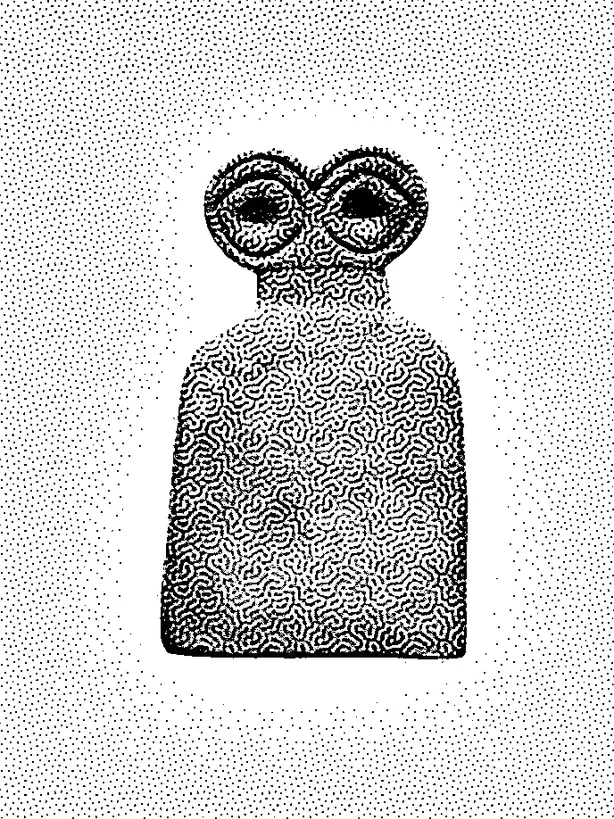
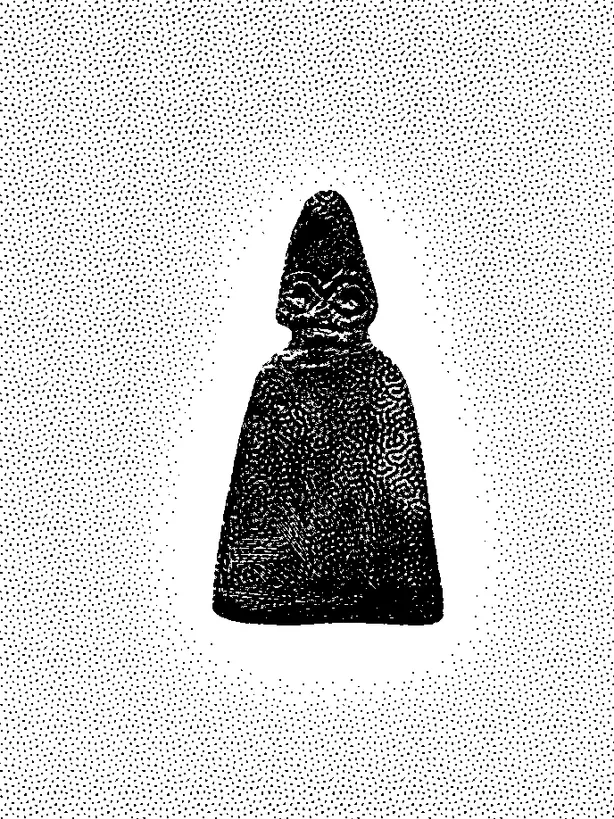
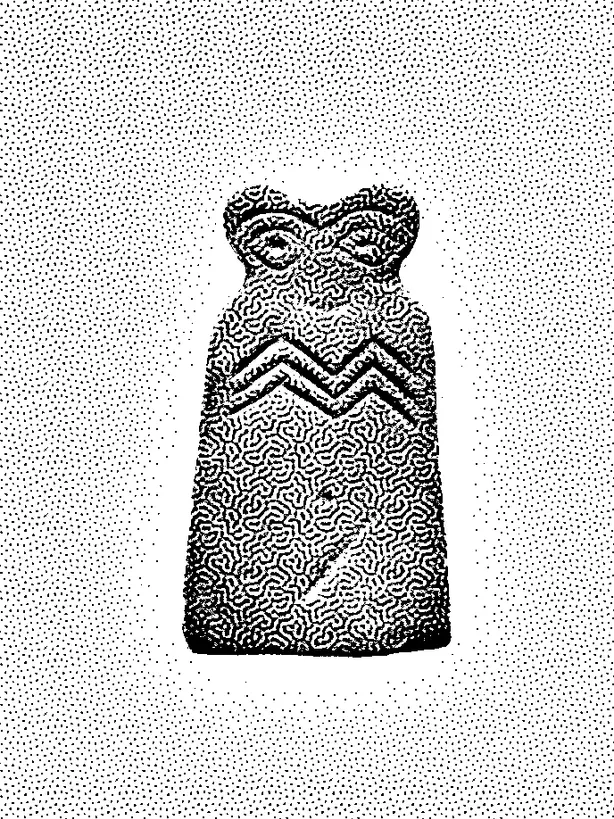
Images: Eye Idol, ca. 3700–3500 BCE, Gift of The Institute of Archaeology, The University of London, 1951. Image available: Metropolitan Museum of Art