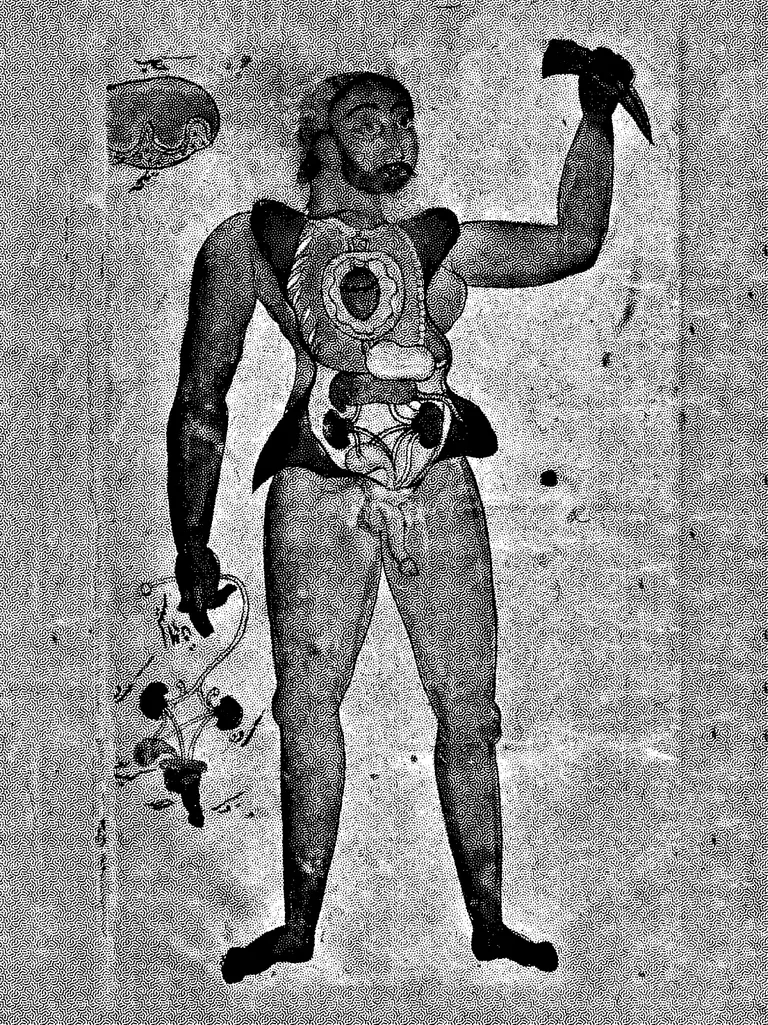
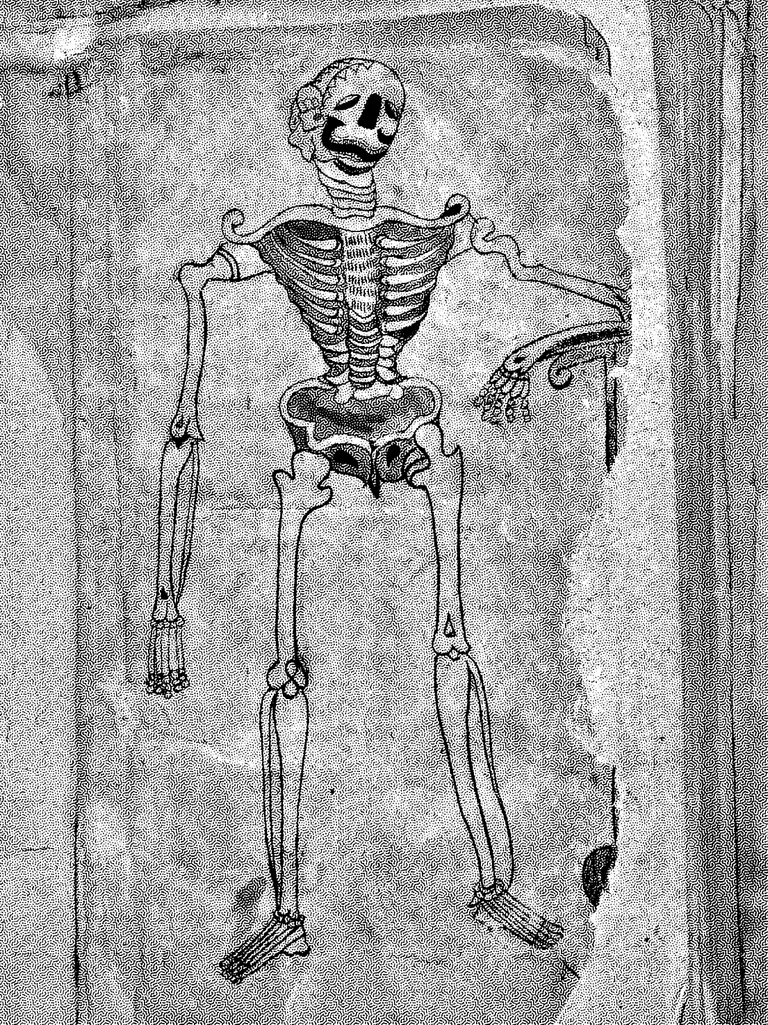
Anatomy is the gesture of dividing the visible to seek what cannot be seen.
Anatomy is the scientific study of the structure of living organisms. It is one of the oldest branches of biological science, with its origins lying in early human attempts to understand the body by cutting it open, drawing it and naming its parts. Broadly speaking, anatomy refers to the internal architecture of organisms, i.e. how bones, muscles, vessels, nerves and organs are arranged and how they relate to each other to form a functional whole.
There are several main branches. Gross anatomy (also known as macroscopic anatomy) examines structures that can be seen with the naked eye, such as a femur, heart or lung. This is the realm of dissection and medical illustration. Microscopic anatomy, on the other hand, deals with tiny structures such as cells, tissues and membranes that require a microscope to make them visible.
Anatomical study serves not only scientific curiosity, but also practical functions for humans and animals alike: in medicine, it provides a map for surgery; in veterinary care, it enables a species-specific understanding; and in art, it allows for more truthful depictions of movement and rest. However, anatomy also reveals something more existential: that we are structured, layered beings. What seems unified is actually composed of systems within systems—skeletal, muscular, circulatory, digestive and nervous—each operating with a certain autonomy yet being deeply interdependent.
Comparative anatomy studies the similarities and differences between species. From bat wings to human arms, and from fish spines to horse backs, anatomy provides a language of structure that cuts across evolutionary lines. In this way, anatomy becomes a tool of both understanding and connection, showing us how we are all stitched together from the same principles and how nature recycles and adapts form. In all this, anatomy is both a revelation and a reduction. It reveals things, but it also divides what was once whole. It is a clear-sighted discipline, but also a confrontation with the hidden: what lies beneath the skin and the structures that hold us up.
In typography, anatomy refers to the structural features of letterforms—the lines, curves, and shapes that together construct a typeface’s identity. These features include elements like the ascender, descender, bowl, counter, stem, spur, ear, and terminal. Typographic anatomy enables designers to describe, compare, and refine typefaces. But beyond taxonomy, it reveals the internal logic of a typeface, its rhythm, balance, and tone. Like biological anatomy, it distinguishes one body from another, but also helps us understand how parts interact to form expressive unity.
The Anatomy of Melancholy
by Robert Burton
Title: The Anatomy of Melancholy
Author: Robert Burton
Release Date: January 1, 2004 eBook #10800
Most Recently Updated: October 28, 2024
Language: English
Credits: Produced by Karl Hagen, D. Moynihan and Distributed Proofreaders
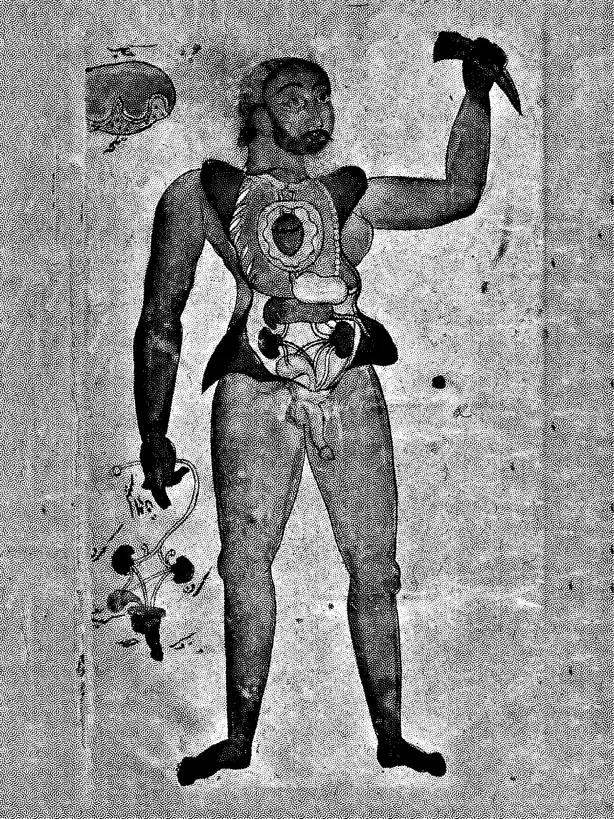
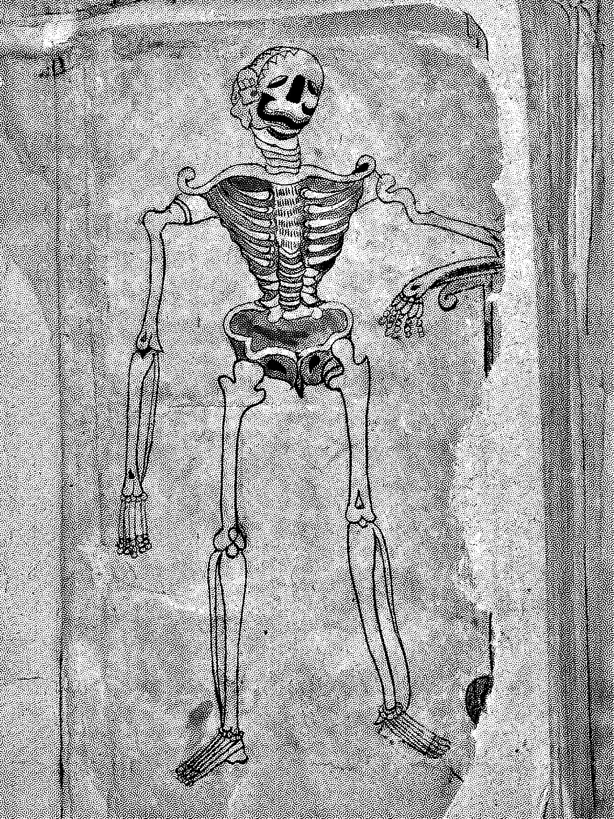
Images: Images: The Medicine of Akbar, ca. 1680-1750. Public domain. Wikimedia Commons