To justify is to align.
Be it aligning things or arguments, be it the alignment of an action and its actor with their surroundings and the forces that shape them. Who justifies, aims to shift the object of his or her justification, either in relation to its circumstances or to the object itself. Justification is a responsive act, regardless of whether what is to be justified lies in the past or in the future, as any justification presupposes something that has gone before. If that something points forwards, its intention is at least roughly outlined (by virtue of its potential to be realised). And yet, justification can mean a speech act of rare agency, inhabited with a groundless sorrow over the circumstances that necessitate it. Things should have been the other way around. From the start.
Whether we view design as ‘creating with existing means’ or not, upon closer inspection, design has always been about constantly arranging things, and not just since the advent of computers. The ongoing alignment of shapes, images, letters with one another and within their surface. Compositional spaces or their amplifiers, such as grids, can also be seen as registers of response. To the questions the design willingly or unwillingly might need to respond to. And in this respect, too, the artboard extends far beyond the immediate surface into the problem definition, the historical and social context, the budget and time constraints, taste, and all other design premises or sudden contingencies.
In typography *justification *has a fairly literal meaning: to justify text means to align it so that both the left and right edges of each line are straight and flush with the margins, creating a uniform look. This is done by increasing and lowering the amount of space between words and letters to stretch each line to the full width of the paragraph. Space, we now take as given, but that has not always been there. Word spacing in fact was first introduced in the 7th century in clerical latin texts and only in the 11th century these aerated composition of text became canonical. Swipe: One of the most remarkable aspects of Plato’s Politeia (The Republic), in which the utopia of an ideal state is discussed over ten books (and in which we find many of Plato’s best-known concepts and quotations, from philosopher kings to the banishment of poets and finally the allegory of the cave), is its introduction: A group of slightly squiffy gentlemen (Socrates, Glaucon, Adeimantus, Thrasymachus and some listeners) stroll home from a party in the evening and begin their entire conversation with the question: What is justice?
The Republic
by Plato
Title: The Republic
Author: Plato
Release Date: October, 1998 eBook #1497
Most Recently Updated: September 11, 2021
Language: English
Credits: Produced by Sue Asscher and David Widger
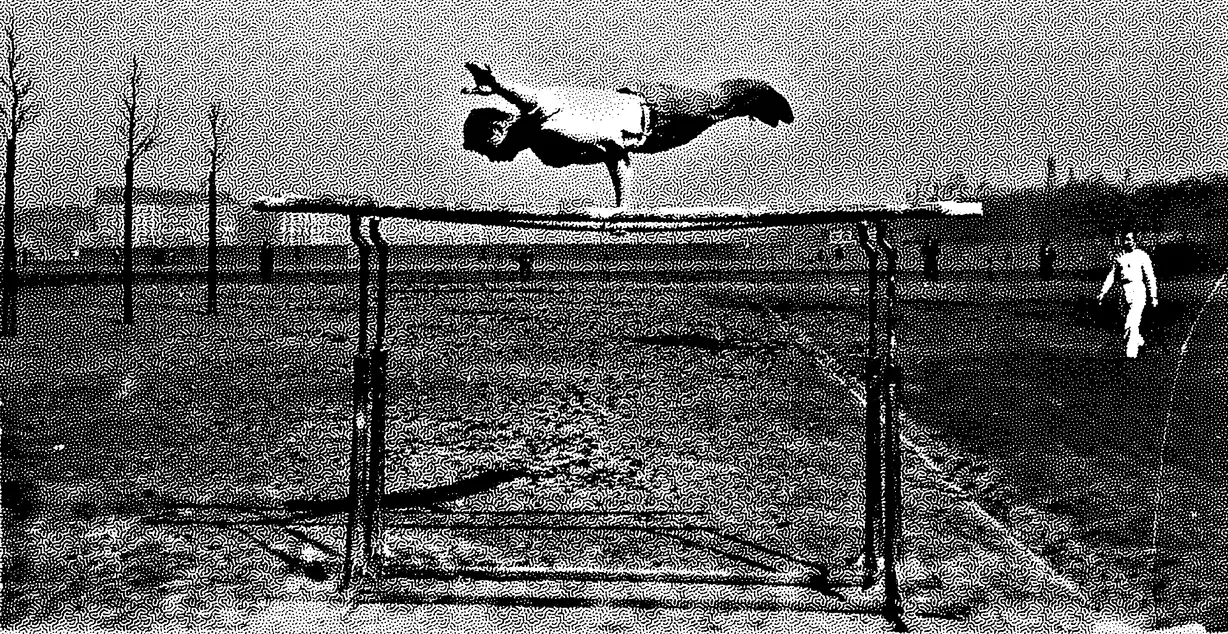
Images: Heinrich Hamann, Turner on the Parallel Bars, ca. 1902. Public Domain. Public Domain. Image Archive