Excess! Transcendence! Surpassing! Design is a phenomenon of surplus. There is always something extra. Not just more than meets the eye. New Objectivity, Modernism, Functionalism, International style and all their neo-isms and post-isms. Not only material realities and the gravity of circumstances deny the most ascetic design the privilege of remaining within itself and not transcending its own boundaries. It is inherit in the thing-in-itself to surpass. Can we already speak of excess? Not at all. However, it is the potential for excess that constitutes creative potentiality.
This, in turn, drives the former forward. Creative potentiality: what do we mean by this? We often hear the clichéd expression ‘creative potential’ used to the point of meaninglessness. A potential that needs to be ‘unlocked’. Possibly with the help of creative techniques. However, creative potentiality describes, in much more mundane terms, the possibilities of design that lie in the contingency of its parts. An ash grey might as well be charcoal grey, this blue could also be red, and that circle might as well be a rectangle. This book is a website and that campaign is a political pamphlet.
In type design, overshoot refers to a small optical adjustment: curved or pointed letters slightly extend beyond the baseline, cap- or x-height so they align with flat shapes. A round form like O or o, and a pointed form like A or V, would appear too small if they stopped exactly at these lines. Our eyes read flat edges as larger and more stable, so curves and diagonals need a little extra height or depth to compensate.
The Happy Golfer
by Henry Leach
Title: The Happy Golfer
Author: Henry Leach
Release Date: August 19, 2011 eBook #37136
Most Recently Updated: January 8, 2021
Language: English
Credits: Produced by Greg Bergquist, Mary Meehan and the Online Distributed Proofreading Team at pgdp.net
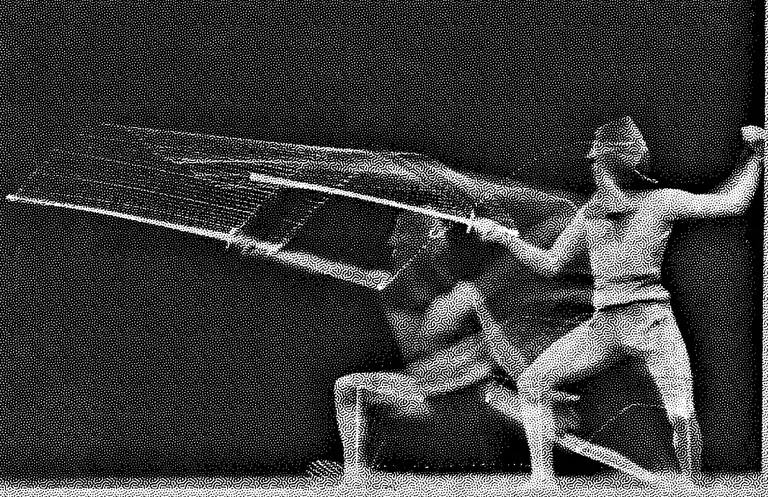
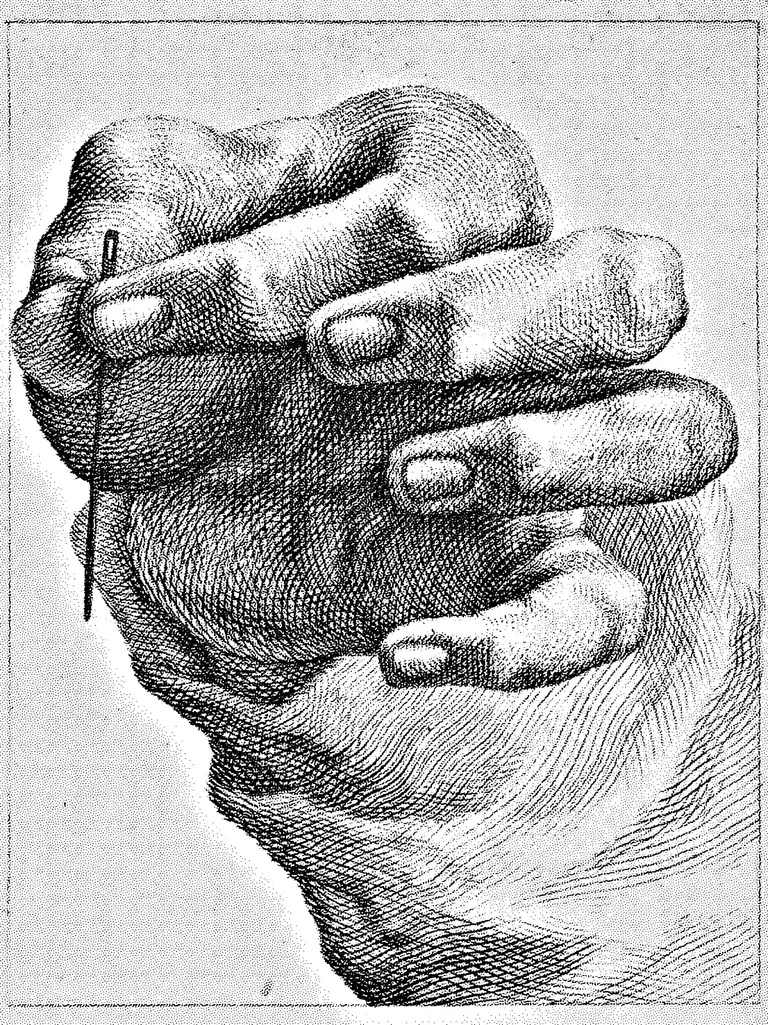
Images: Georges Demeny, Fencer, 1906. Purchase, Alfred Stieglitz Society Gifts, 2010. Image available at: Metropolitan Museum of Art, Henricus Wilhelmus Couwenberg, after Jeremias Gottlob Rugendas, Study of a Hand with a Needle Between Thumb and Index Finger, ca.1830-1845. Public Domain. Image available at: Flashback